Research Initiatives
Marine Research Projects
My current research focuses on the great sperm whales in eastern North Pacific.
The sperm whale, the largest of the toothed whales, is a globally distributed, deep-diving marine mammal generally inhabiting continental slope or oceanic waters (Rice, 1989). They prey primarily on mesopelagic and bathypelagic squid; males are more likely than females to prey on fish, sharks and rays (Rice, 1989). Sperm whales exhibit pronounced sexual dimorphism and sexual segregation of adults and a complex, hierarchical social structure (Rice, 1989; Whitehead, 2003).
In the Pacific, the foundation of female social structure consists of long-term social units of approximately 10.4 females and their dependent young (range = 3–24, SD = 6.23) (Whitehead, 2003). Units may travel with one or more other units forming temporary “groups” (Whitehead et al., 1991; Whitehead and Kahn, 1992) which, in turn, are structured into acoustic clans (Rendell and Whitehead, 2003; Hersh et al., 2022). In the Pacific, units and groups appear to be comprised of clusters of both related and unrelated individuals (Mesnick 2001).
Males leave their natal units between four and 21 years of age and form “bachelor groups.” As they mature, they disperse from these groups and the largest males tend to be solitary (Best, 1979). In the North Pacific, females and their dependent young typically occur at latitudes less than 40° and are occasionally found at latitudes up to 50°N (Rice, 1989). Males move to higher latitudes to feed, returning to lower latitudes to mate (Rice, 1989).
Sperm whales were targeted during two periods of commercial whaling that peaked in the 1840s and 1960s, respectively, and largely ended in the mid-1980s with the International Whaling Commission’s moratorium on commercial whaling. The hunt was global in scale, with over 300,000 sperm whales estimated to have been killed in the North Pacific alone during the 20th century (Rocha et al., 2014; Ivashchenko et al., 2014).
Today, sperm whales are a species of conservation concern because of both historical and contemporary anthropogenic impacts, including ship strikes, fishery interactions, pollutants, plastics, noise, and environmental change. Efforts by the National Marine Fisheries Service (NMFS) to assess conservation status and to mitigate current threats relies are complicated by the species’ wide distribution, nomadic nature and hierarchical social structure. There are many unknowns when it comes to knowledge of sperm whale movements, population structure and behavior. In my work I seek to unravel these mysteries and provide insights to open questions.
Current Projects
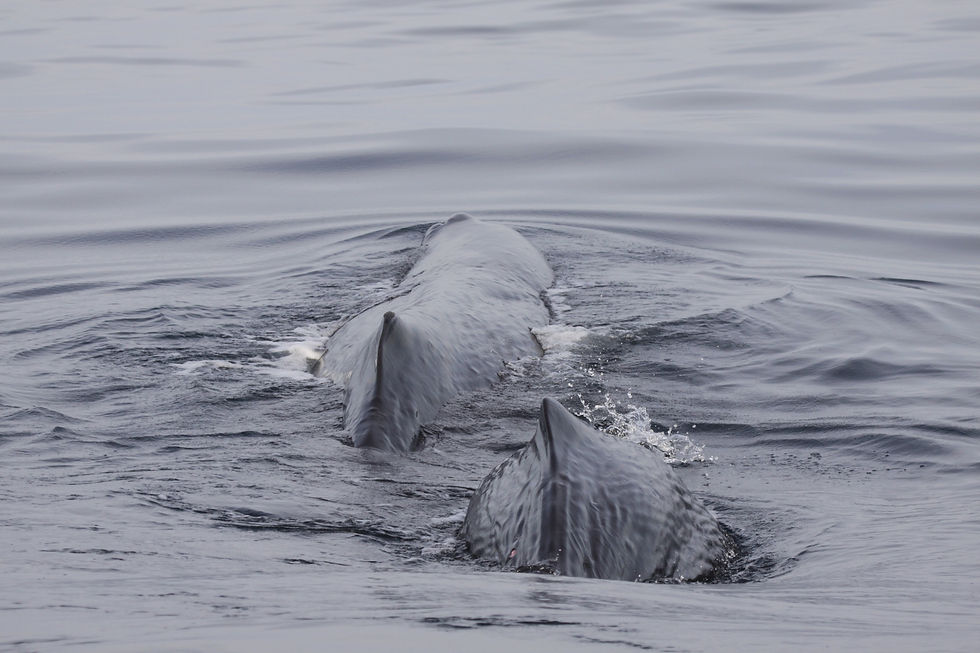
California Boys
Sperm whales are a rare sight off the California Coast, so sightings of both solitary males and female groups of sperm whales are a thrill for scientist and whale watchers alike. New evidence has emerged to indicate that sperm whales are a far more common visitor to the Southern California Bight than previously assumed. Intriguingly, we've seen a recurrence of adult male sperm whales -- solo or in pairs -- in and around the Channel Islands National Monument. This project seeks to uncover when they come here, for how long, and why they are attracted to these waters.
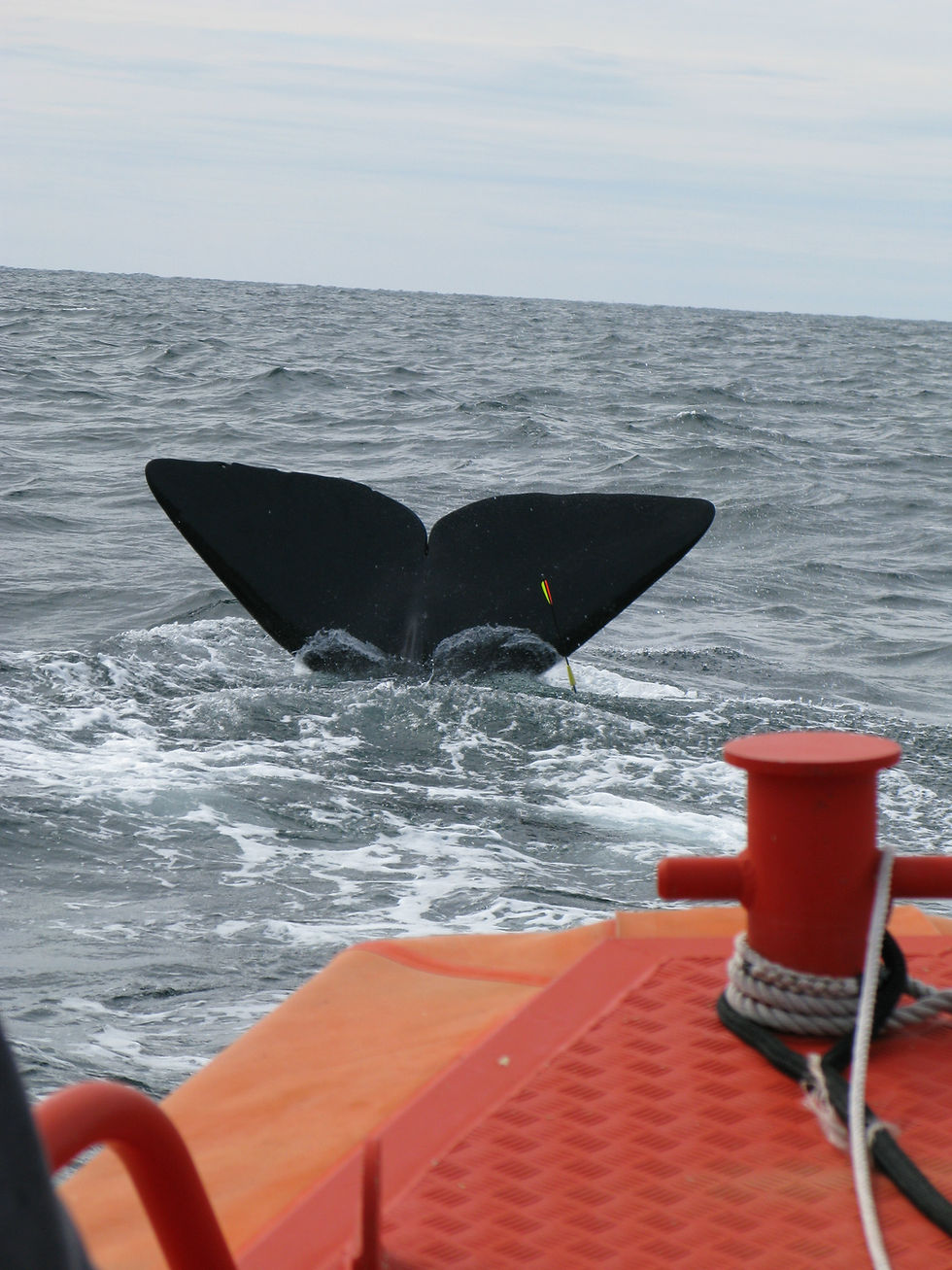
Whale tracking through photo-ID
Photo-identification (photo-ID) is the use of photos to identify unique individual of a species, like sperm whales. The sperm whale's gigantic tail is like a fingerprint--each one is unique. Long-term data sets of photo-ID can reveal priceless data about this animal's movements, migration patterns, and life history. My project assembled 4 decades of photo-ID data collected by NOAA and citizen scientists into a catalog to help future researchers find, track, and study these magnificent whales.
Photo credit: NOAA

Using AI to enhance photo-ID research
Artificial intelligence has been developed to aid researchers and scientists using photo-ID to accelerate and expand their work. More specifically, computer vision developed through machine learning models has begun to make very important breakthroughs on platforms like Flukebook and Happywhale. But getting started on these platforms can be daunting. That's why I developed a step-by-step guide for researchers, "Getting Started with Flukebook and Happywhale" presented at the International Whaling Commisssion Scientific Committee, Photo-ID subcommittee.